

A carpet seam should join two sections of carpet into a flat, stable surface. Over time, however, a seam can begin to open, fray or lift. Once that happens, the damage rarely improves on its own. Foot traffic and vacuuming can continue pulling at the exposed edges, turning a small separation into a larger repair.
The good news is that many separated carpet seams can be repaired without replacing the entire room. The important question is not simply how wide the gap has become, but whether the carpet backing and surrounding material are still sound enough to form a durable new seam.
Why Do Carpet Seams Separate?
A seam can fail for several reasons.
Installation Problems
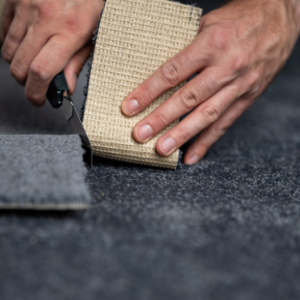
Carpet seams depend on proper cutting, alignment, sealing and bonding. The Carpet and Rug Institute's residential installation guidance states that seam edges should be sealed with an appropriate adhesive to help prevent edge ravel and delamination.
If a seam was poorly cut, inadequately sealed or not bonded correctly during installation, the weakness will become more obvious as the carpet ages.
Heavy Foot Traffic

Seams located in frequently traveled areas receive repeated pressure from shoes, furniture movement, and vacuum cleaners. Once the edge begins lifting or fraying, that traffic can accelerate the damage.
Carpet Movement
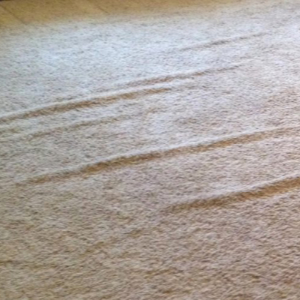
Loose carpet can place additional stress on a seam. Ripples, wrinkles, and buckling are signs that the carpet may no longer be held under proper tension. In that situation, simply reconnecting the seam may not address the underlying problem.
Steve's guide to signs that carpet needs stretching explains how loose carpet develops and when professional stretching may be needed.
Damage to the Backing
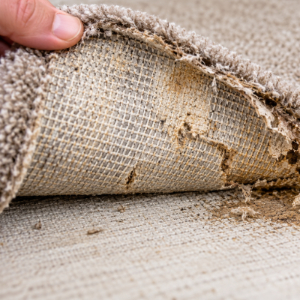
The backing gives carpet much of its structural stability. Water damage, delamination, age, or physical damage can weaken the material along a seam. If the backing is breaking down, there may be too little sound material left for a conventional re-seam.
Is Every Visible Seam a Failed Seam?
No. Carpet seams are not necessarily invisible, even when they are properly installed. Depending on the carpet style, lighting, pile direction, and room layout, a sound seam may still be noticeable.
A seam is more likely to require repair when you can see an actual gap, loose edges, unraveling fibers, lifted carpet or movement where the two sections meet.
Trying to "fix" a secure seam merely because it can be seen may not actually improve its appearance.
How Is a Separated Carpet Seam Repaired?
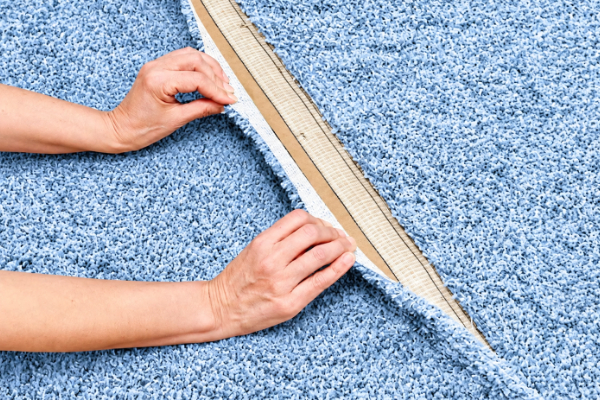
The exact repair depends on the carpet and the extent of the damage. A technician first needs to determine whether both sides of the seam still have usable backing and whether the carpet can be brought back together without distorting the surrounding area.
When the material is in good condition, the damaged seam can often be opened as needed, cleaned up, realigned and bonded again using the appropriate seaming method. The goal is to create a secure connection while keeping the pile direction and surrounding carpet aligned.
If the carpet has also loosened across the room, re-stretching may need to be part of the repair. Steve's carpet repair service includes both re-seaming and stretching because the two problems will often occur together.
When Is Re-Seaming Not Enough?
A straightforward re-seam becomes less practical when the damage extends beyond the joint itself.
Examples include:
- Significant fiber loss along both edges
- Torn or deteriorated backing
- Extensive delamination
- Missing carpet material
- Severe water damage
- Multiple deteriorated areas surrounding the seam
In some cases, a damaged section can be removed and replaced with matching donor carpet rather than replacing the entire floor. That becomes a patching repair instead of a simple re-seam.
The condition and age of the carpet also matters. Repairing one seam may make sense when the rest of the carpet remains in good condition. If the room has widespread tears, heavy matting, backing failure or numerous failing seams, entire room replacement may be more practical than continuing to repair certain areas.
Should You Glue a Carpet Seam Back Together Yourself?
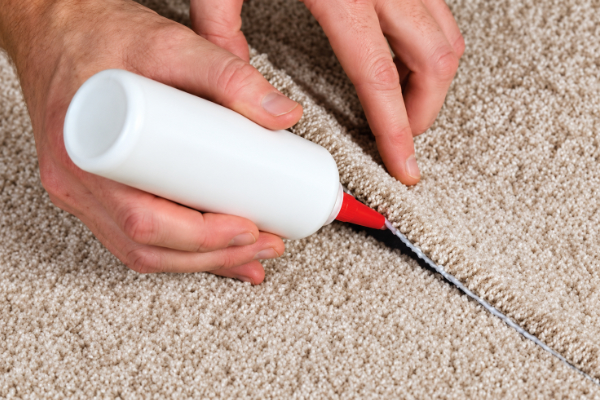
A small opening may look like an easy glue repair, but putting household adhesive into the gap can create additional problems. Excess glue can reach the face fibers, harden where it is visible or make a later professional repair more difficult.
Carpet seaming uses materials and techniques intended to bond the backing while controlling the position of the adjoining edges. If a seam is actively separating, protecting the area from additional traffic and having the damage assessed by a professional is the way to go.
Repair the Seam Before the Damage Spreads
A separating seam does not automatically mean the carpet has reached the end of its life. If the surrounding backing remains intact and enough material is available to reconstruct the joint, professional re-seaming can often restore a secure transition between the carpet sections.
The sooner the problem is addressed, the better the chance that the repair can remain limited to the seam itself rather than expanding into a larger patch or replacement project.
Wondering if your carpet seam can be repaired?
Share a quick description (and photos if possible) with Steve's Carpet Care & Restoration. Our technicians can let you know whether a re-seam, stretching, or a small patch is the most practical option for your room.Ask About Carpet Seam Repair
Carpet Seam Repair FAQs
Not every seam can be saved, but many can. Repair is most likely when the backing on both sides is still intact, there is minimal fiber loss, and the carpet can be brought back together without stretching it out of shape. When backing is missing or badly deteriorated, patching or replacement may be a better option.
Costs vary by market, seam length, and whether stretching or patching is also required. A simple re-seam is usually far less than replacing a full room of carpet. The most accurate way to estimate cost is to have a professional inspect the seam and provide a written quote based on the specific conditions.
Some seams remain slightly visible even when they are structurally sound. A proper repair aims to close gaps, remove frayed edges, and align the pile so the seam blends as well as the carpet style allows. Low-pile and patterned carpets often show seams more than plush, uniform styles.
Many seam repairs can be completed in under an hour, especially when access is clear and the damage is localized. If the carpet also needs stretching across a larger area or patching, the visit may take longer. Your technician can give you a time estimate after examining the room.
Furniture should be moved off or away from the seam so the technician can lift and work on the area safely. For small items a technician may be able to assist, but large or heavy furniture should typically be moved in advance or discussed when scheduling the appointment.
If you see ripples, waves, or general looseness in the room, re-stretching is often recommended along with re-seaming. Tightening the carpet relieves stress on the seam so the new bond is less likely to fail again under traffic.